The Rest In Peace and Remembrance Thread
Moderators: The People's DJ, David Paleg
-
Bob Campbell
- Member

- Posts: 2232
- Joined: Mon Dec 19, 2005 12:13 pm
- Location: Blue Heaven
Re: The Rest In Peace and Remembrance Thread
"Bring me the butter".
-
David Paleg

- Member

- Posts: 1024
- Joined: Sat Jul 31, 2004 8:43 pm
- Location: Cross Lanes, WV, Earth. Solar System, Milky Way
- Contact:
Re: The Rest In Peace and Remembrance Thread
Charles H. Kaman, Helicopter Innovator, Dies at 91
By MOTOKO RICH
Published: February 2, 2011
Charles H. Kaman, an innovator in the development and manufacture of helicopter technology and, following a wholly different passion, the inventor of one of the first electrically amplified acoustic guitars, died on Monday in Bloomfield, Conn. He was 91.
Mr. Kaman, who had suffered several strokes over the last decade, died of complications of pneumonia, his daughter, Cathleen Kaman, said. He lived in Bloomfield.
Mr. Kaman (pronounced ka-MAN) was a 26-year-old aeronautical engineer when he founded the Kaman Aircraft Company in 1945 in the garage of his mother’s home in West Hartford, Conn. By the time he retired as chairman in 2001, he had built the Kaman Corporation into a billion-dollar concern that distributes motors, pumps, bearings and other products as well as making helicopters and their parts.
Within the aerospace industry, Mr. Kaman is best known for inventing dual intermeshing helicopter rotors, which move in opposite directions, and for introducing the gas turbine jet engine to helicopters. The company’s HH-43 Huskie was a workhorse in rescue missions in the Vietnam War.
Mr. Kaman, a guitar enthusiast, also invented the Ovation guitar, effectively reversing the vibration-reducing technology of helicopters to create a generously vibrating instrument that incorporated aerospace materials into its rounded back. In the mid-1960s he created Ovation Instruments, a division of his company, to manufacture it.
Full story at The New York Times
-=-=-=-=-=-=-=-=-=-
Actress Lena Nyman dead at 66
STOCKHOLM (AP) — Actress Lena Nyman, who starred in sexually explicit movies that defined Swedish cinema in the 1960s, has died. She was 66.
Nyman's manager Mats Nilemar says she died peacefully in a Stockholm hospital early Friday after a long illness.
Nyman starred in more than 50 Swedish films and plays. She won international fame mainly as the lead character in "I Am Curious — Yellow," a 1967 film that was banned in the U.S. for two years, and its sequel, "I Am Curious — Blue."
Directed by Vilgot Sjoman, the movies combined social criticism with frank depictions of nudity and sex, contributing to the Sweden's image in the '60s as sexually liberated.
Nyman also starred in Ingmar Bergman's "Autumn Sonata."
By MOTOKO RICH
Published: February 2, 2011
Charles H. Kaman, an innovator in the development and manufacture of helicopter technology and, following a wholly different passion, the inventor of one of the first electrically amplified acoustic guitars, died on Monday in Bloomfield, Conn. He was 91.
Mr. Kaman, who had suffered several strokes over the last decade, died of complications of pneumonia, his daughter, Cathleen Kaman, said. He lived in Bloomfield.
Mr. Kaman (pronounced ka-MAN) was a 26-year-old aeronautical engineer when he founded the Kaman Aircraft Company in 1945 in the garage of his mother’s home in West Hartford, Conn. By the time he retired as chairman in 2001, he had built the Kaman Corporation into a billion-dollar concern that distributes motors, pumps, bearings and other products as well as making helicopters and their parts.
Within the aerospace industry, Mr. Kaman is best known for inventing dual intermeshing helicopter rotors, which move in opposite directions, and for introducing the gas turbine jet engine to helicopters. The company’s HH-43 Huskie was a workhorse in rescue missions in the Vietnam War.
Mr. Kaman, a guitar enthusiast, also invented the Ovation guitar, effectively reversing the vibration-reducing technology of helicopters to create a generously vibrating instrument that incorporated aerospace materials into its rounded back. In the mid-1960s he created Ovation Instruments, a division of his company, to manufacture it.
Full story at The New York Times
-=-=-=-=-=-=-=-=-=-
Actress Lena Nyman dead at 66
STOCKHOLM (AP) — Actress Lena Nyman, who starred in sexually explicit movies that defined Swedish cinema in the 1960s, has died. She was 66.
Nyman's manager Mats Nilemar says she died peacefully in a Stockholm hospital early Friday after a long illness.
Nyman starred in more than 50 Swedish films and plays. She won international fame mainly as the lead character in "I Am Curious — Yellow," a 1967 film that was banned in the U.S. for two years, and its sequel, "I Am Curious — Blue."
Directed by Vilgot Sjoman, the movies combined social criticism with frank depictions of nudity and sex, contributing to the Sweden's image in the '60s as sexually liberated.
Nyman also starred in Ingmar Bergman's "Autumn Sonata."
-
unchoopfan
- Member

- Posts: 209
- Joined: Mon Feb 03, 2003 10:52 am
Feb. 6: Thin Lizzy guitarist Gary Moore, 58
Thin Lizzy guitarist Gary Moore dead at 58
http://www.bbc.co.uk/news/entertainment-arts-12378833
Feb. 6, 2011
LONDON (AP) - Bandmates say rock guitarist Gary Moore, a former member of influential Irish band Thin Lizzy, has died. He was 58.
Manager Adam Parsons told the BBC that Moore was found dead Sunday at a hotel on Spain's Costa del Sol, where he was on holiday. The cause of death was not immediately known.
Thin Lizzy drummer Brian Downey said Moore's death was a "total shock," and guitarist Scott Gorham said he was "a great player and a great guy."
Born in Belfast, Northern Ireland in 1952, Moore was a member of Dublin band Skid Row before joining Thin Lizzy in 1973, playing on tracks for the "Nightlife" album. He left after four months, but rejoined four years later and played on the band's "Black Rose" album before going solo once again.
He had a successful solo career, and his accomplished, bluesy playing won plaudits from other musicians.
Thin Lizzy had global hits in the 1970s with songs like "The Boys are Back in Town" and "Whiskey in the Jar." Frontman Phil Lynott died in 1986, but with a different lineup the band continues to tour today.
Funeral details were not immediately available.
http://www.bbc.co.uk/news/entertainment-arts-12378833
Feb. 6, 2011
LONDON (AP) - Bandmates say rock guitarist Gary Moore, a former member of influential Irish band Thin Lizzy, has died. He was 58.
Manager Adam Parsons told the BBC that Moore was found dead Sunday at a hotel on Spain's Costa del Sol, where he was on holiday. The cause of death was not immediately known.
Thin Lizzy drummer Brian Downey said Moore's death was a "total shock," and guitarist Scott Gorham said he was "a great player and a great guy."
Born in Belfast, Northern Ireland in 1952, Moore was a member of Dublin band Skid Row before joining Thin Lizzy in 1973, playing on tracks for the "Nightlife" album. He left after four months, but rejoined four years later and played on the band's "Black Rose" album before going solo once again.
He had a successful solo career, and his accomplished, bluesy playing won plaudits from other musicians.
Thin Lizzy had global hits in the 1970s with songs like "The Boys are Back in Town" and "Whiskey in the Jar." Frontman Phil Lynott died in 1986, but with a different lineup the band continues to tour today.
Funeral details were not immediately available.
-
Scott Reppert
- Member
- Posts: 1446
- Joined: Tue Dec 18, 2001 12:50 pm
- Location: Fairmont, WV
Re: The Rest In Peace and Remembrance Thread
Former Pirates Manager Chuck Tanner Dies At 82
PITTSBURGH (AP)—For Chuck Tanner, it was all about family, in so many ways.
There was was the 1979 World Series when the Pittsburgh Pirates—energized by the thumping anthem “We Are Family”—soared to a title that ended with the players’ wives dancing on the dugout roof.
And there was Game 5 of that Series, when the great comeback started for a Pirates team facing elimination by Baltimore. Tanner learned his mother had died that morning, but he insisted on managing because he knew she would have wanted him to do the job.
On Friday, Tanner, one of baseball’s relentlessly upbeat figures, died at 82 in his hometown of New Castle, Pa. He died of a long illness at his home after spending time in hospice care.
“In baseball, we will remember his eternal optimism and his passion for the game,” Tanner’s son, former major league pitcher Bruce, said in a statement.
He’ll be noted in the record book, too, for a most smashing debut in the majors: Playing for the Milwaukee Braves in 1955, he homered on the first pitch he saw as a big leaguer.
Renowned for his never-wavering confidence and an inherent belief that no deficit was too large to overcome, Tanner managed the White Sox, Athletics, Pirates and Braves to a record of 1,352-1,381 from 1970-88. He won one division title and finished second five times.
“It’s hard to win a pennant,” Tanner once said, “but it’s harder to lose one.”
Tanner’s irrepressible faith was tested on that morning of Game 5 in 1979, with the Pirates trailing the Orioles 3-1. Tanner awoke and found out his mother had died in a nursing home in New Castle.
A grieving Tanner stuck with his team. He took a huge gamble by starting left-hander Jim Rooker, who had won four games all season, rather than future Hall of Famer Bert Blyleven. Rooker held the Orioles to one run over five innings, and the Pirates, led by aging star Willie Stargell, went on to sweep the final three games.
“Chuck was a class act who always carried himself with grace, humility and integrity,” Pirates President Frank Coonelly said in a statement. “While no one had a sharper baseball mind, Chuck was loved by his players and the city of Pittsburgh because he was always positive, enthusiastic and optimistic about his Bucs and life in generally.”
After retiring from managing, Tanner remained involved with the Pirates, most recently serving as a senior adviser to general manager Neal Huntington.
Commissioner Bud Selig called Tanner a “lifetime contributor to baseball.”
“Chuck spent his life serving baseball in a variety of roles,” Selig said in a statement. “And I am particularly glad that in recent years he returned to the Pirates, the club with which he will be forever linked.”
The Pirates had seven winning seasons in Tanner’s first eight years, several after they had terrible starts. Some players later abused the considerable freedom Tanner gave them, however, such as allowing friends and family members to roam freely in the clubhouse.
That permissive attitude was cited in part for the Pirates’ drug problems, involving such players such as 1978 NL MVP Dave Parker, that were revealed during the widely publicized Pittsburgh trials of alleged drug suppliers to major leaguers in 1985.
Tanner testified he had only a cursory knowledge of such drug use. Former Pirates shortstop Dale Berra contradicted that claim, testifying Tanner specifically warned him to stay away from reputed drug dealers and once asked Berra if he had a cocaine problem.
The Pirates fired Tanner in the aftermath of the drug trials—“I would have fired myself,” Tanner once said.
Tanner had already made his mark in the dugout before joining the Pirates.
While with the White Sox from 1972-75, Tanner, a former major league outfielder, turned modestly successful, knuckleball-throwing reliever Wilbur Wood into a successful and tireless starter and Rich “Goose” Gossage into one of the premier closers of his era. He was one of the first managers to use relievers in situational roles, as all teams do today.
Let go when owner Bill Veeck reacquired the White Sox in 1975, Tanner quickly hooked on with the Athletics. With Reggie Jackson gone and home runs at a premium, Tanner turned the 1976 A’s loose for an AL-record 341 stolen bases, an average of more than two per game. Eight players had 20 or more, including 31 by “designated runner” Larry Lintz, who had one at-bat all season.
Tanner was coveted by the Pirates, and the team made one of the few trades involving a manager in major league history to obtain Tanner’s contract. Pittsburgh sent All-Star catcher Manny Sanguillen and cash to the A’s for Tanner.
Tanner kept running, doubling the Pirates’ stolen base total from 130 to 260. They finished second in each of their first two seasons under him, in 1977 and ’78, then overcame a 7-11 record in April 1979 to win the NL East before sweeping the Reds in a three-game NLCS.
Despite having front-line starters Blyleven and John Candelaria, the Pirates didn’t have a starting pitcher with more than 14 wins that season, or a position player with more than 94 RBIs. Still, the team’s chemistry was undeniable.
Led by the 39-year-old Stargell’s clutch hitting (32 homers, 82 RBIs), the team adopted a popular song of the time by Sister Sledge to become known as the Family (or, as it was often spelled, the Fam-A-Lee). Stargell was the NL’s co-MVP, as well as the MVP of the NLCS and the World Series, despite being limited to 424 at-bats by age and injuries.
“Having Willie Stargell that year was like having a diamond ring on your finger,” Tanner said.
After being let go by the Pirates, Tanner was quickly hired by Braves owner Ted Turner. But he was fired again less than halfway through that contract after going 153-208 in two-plus seasons in Atlanta.
Tanner later worked as a scout for the Brewers and Indians but did not manage again despite having several offers. In 2006, he was honored with an annual award presented by the baseball writers to the Pirates player who is most cooperative with the media. The baseball field at his alma mater, Shenango High in New Castle, is named for him.
Born on the Fourth of July in 1928, Tanner hit .261 with 21 homers in 396 games as a spare outfielder with the Braves, Cubs, Indians and Angels, missing out on a chance to be an everyday outfielder with the Cubs in 1958 because of a shoulder injury.
Son Bruce pitched briefly in the majors with the White Sox and later was the Pirates’ bullpen coach. Another son, Mark, pitched in the minors.
Tanner’s wife, Barbara, died in 2006, the month after her husband served as honorary NL coach in the All-Star game in Pittsburgh. Phil Garner, the NL manager, insisted Tanner be on his staff.
“Chuck Tanner taught me nearly everything I know about baseball,” Garner said.
PITTSBURGH (AP)—For Chuck Tanner, it was all about family, in so many ways.
There was was the 1979 World Series when the Pittsburgh Pirates—energized by the thumping anthem “We Are Family”—soared to a title that ended with the players’ wives dancing on the dugout roof.
And there was Game 5 of that Series, when the great comeback started for a Pirates team facing elimination by Baltimore. Tanner learned his mother had died that morning, but he insisted on managing because he knew she would have wanted him to do the job.
On Friday, Tanner, one of baseball’s relentlessly upbeat figures, died at 82 in his hometown of New Castle, Pa. He died of a long illness at his home after spending time in hospice care.
“In baseball, we will remember his eternal optimism and his passion for the game,” Tanner’s son, former major league pitcher Bruce, said in a statement.
He’ll be noted in the record book, too, for a most smashing debut in the majors: Playing for the Milwaukee Braves in 1955, he homered on the first pitch he saw as a big leaguer.
Renowned for his never-wavering confidence and an inherent belief that no deficit was too large to overcome, Tanner managed the White Sox, Athletics, Pirates and Braves to a record of 1,352-1,381 from 1970-88. He won one division title and finished second five times.
“It’s hard to win a pennant,” Tanner once said, “but it’s harder to lose one.”
Tanner’s irrepressible faith was tested on that morning of Game 5 in 1979, with the Pirates trailing the Orioles 3-1. Tanner awoke and found out his mother had died in a nursing home in New Castle.
A grieving Tanner stuck with his team. He took a huge gamble by starting left-hander Jim Rooker, who had won four games all season, rather than future Hall of Famer Bert Blyleven. Rooker held the Orioles to one run over five innings, and the Pirates, led by aging star Willie Stargell, went on to sweep the final three games.
“Chuck was a class act who always carried himself with grace, humility and integrity,” Pirates President Frank Coonelly said in a statement. “While no one had a sharper baseball mind, Chuck was loved by his players and the city of Pittsburgh because he was always positive, enthusiastic and optimistic about his Bucs and life in generally.”
After retiring from managing, Tanner remained involved with the Pirates, most recently serving as a senior adviser to general manager Neal Huntington.
Commissioner Bud Selig called Tanner a “lifetime contributor to baseball.”
“Chuck spent his life serving baseball in a variety of roles,” Selig said in a statement. “And I am particularly glad that in recent years he returned to the Pirates, the club with which he will be forever linked.”
The Pirates had seven winning seasons in Tanner’s first eight years, several after they had terrible starts. Some players later abused the considerable freedom Tanner gave them, however, such as allowing friends and family members to roam freely in the clubhouse.
That permissive attitude was cited in part for the Pirates’ drug problems, involving such players such as 1978 NL MVP Dave Parker, that were revealed during the widely publicized Pittsburgh trials of alleged drug suppliers to major leaguers in 1985.
Tanner testified he had only a cursory knowledge of such drug use. Former Pirates shortstop Dale Berra contradicted that claim, testifying Tanner specifically warned him to stay away from reputed drug dealers and once asked Berra if he had a cocaine problem.
The Pirates fired Tanner in the aftermath of the drug trials—“I would have fired myself,” Tanner once said.
Tanner had already made his mark in the dugout before joining the Pirates.
While with the White Sox from 1972-75, Tanner, a former major league outfielder, turned modestly successful, knuckleball-throwing reliever Wilbur Wood into a successful and tireless starter and Rich “Goose” Gossage into one of the premier closers of his era. He was one of the first managers to use relievers in situational roles, as all teams do today.
Let go when owner Bill Veeck reacquired the White Sox in 1975, Tanner quickly hooked on with the Athletics. With Reggie Jackson gone and home runs at a premium, Tanner turned the 1976 A’s loose for an AL-record 341 stolen bases, an average of more than two per game. Eight players had 20 or more, including 31 by “designated runner” Larry Lintz, who had one at-bat all season.
Tanner was coveted by the Pirates, and the team made one of the few trades involving a manager in major league history to obtain Tanner’s contract. Pittsburgh sent All-Star catcher Manny Sanguillen and cash to the A’s for Tanner.
Tanner kept running, doubling the Pirates’ stolen base total from 130 to 260. They finished second in each of their first two seasons under him, in 1977 and ’78, then overcame a 7-11 record in April 1979 to win the NL East before sweeping the Reds in a three-game NLCS.
Despite having front-line starters Blyleven and John Candelaria, the Pirates didn’t have a starting pitcher with more than 14 wins that season, or a position player with more than 94 RBIs. Still, the team’s chemistry was undeniable.
Led by the 39-year-old Stargell’s clutch hitting (32 homers, 82 RBIs), the team adopted a popular song of the time by Sister Sledge to become known as the Family (or, as it was often spelled, the Fam-A-Lee). Stargell was the NL’s co-MVP, as well as the MVP of the NLCS and the World Series, despite being limited to 424 at-bats by age and injuries.
“Having Willie Stargell that year was like having a diamond ring on your finger,” Tanner said.
After being let go by the Pirates, Tanner was quickly hired by Braves owner Ted Turner. But he was fired again less than halfway through that contract after going 153-208 in two-plus seasons in Atlanta.
Tanner later worked as a scout for the Brewers and Indians but did not manage again despite having several offers. In 2006, he was honored with an annual award presented by the baseball writers to the Pirates player who is most cooperative with the media. The baseball field at his alma mater, Shenango High in New Castle, is named for him.
Born on the Fourth of July in 1928, Tanner hit .261 with 21 homers in 396 games as a spare outfielder with the Braves, Cubs, Indians and Angels, missing out on a chance to be an everyday outfielder with the Cubs in 1958 because of a shoulder injury.
Son Bruce pitched briefly in the majors with the White Sox and later was the Pirates’ bullpen coach. Another son, Mark, pitched in the minors.
Tanner’s wife, Barbara, died in 2006, the month after her husband served as honorary NL coach in the All-Star game in Pittsburgh. Phil Garner, the NL manager, insisted Tanner be on his staff.
“Chuck Tanner taught me nearly everything I know about baseball,” Garner said.
Scott Reppert
Music Director/Program Director/On-Air Personality
WTCS/WFGM/WMQC/WAIJ/WLIC/WRIJ/WKJL/WRWJ/WPCL/WWPN
Operations Manager: Hope Radio, T8WH, Palau
Production/Editor: "Believe Right" and "MFC WorldWide"
"For mine eyes have seen Thy salvation"--Luke 2:30
Music Director/Program Director/On-Air Personality
WTCS/WFGM/WMQC/WAIJ/WLIC/WRIJ/WKJL/WRWJ/WPCL/WWPN
Operations Manager: Hope Radio, T8WH, Palau
Production/Editor: "Believe Right" and "MFC WorldWide"
"For mine eyes have seen Thy salvation"--Luke 2:30
-
jag
- Member

- Posts: 820
- Joined: Thu Aug 29, 2002 2:57 pm
Re: The Rest In Peace and Remembrance Thread
Betty Garrett, actress in film, TV, Broadway, dies
Betty Garrett, the vivacious Broadway star who played Frank Sinatra's sweetheart in two MGM musicals before her career was hampered by the Hollywood blacklist, has died in Los Angeles, her son said Sunday. She was 91.
Garrett died Saturday at Ronald Reagan UCLA Medical Center, most likely from an aortic aneurysm, said her son, Garrett Parks. Garrett had been in good health and taught her usual musical comedy class at Theater West, the non-profit organization she helped found, on Wednesday night, but Friday checked into the hospital with heart trouble, and died with her family at her side the following morning.
Garrett was best known as the flirtatious girl in love with the shy Sinatra in "Take Me Out to the Ballgame" and "On the Town," both in 1949, and later in life she became well-known to TV audiences with recurring roles in the 1970s sitcoms "All in the Family" and "Laverne & Shirley."
Particularly memorable was "On the Town," the Betty Comden, Adolph Green and Leonard Bernstein musical about three sailors on leave in New York City. She played the comically aggressive cab driver who pursues Sinatra (singing the racy "Come Up to My Place") while his pals, Gene Kelly and Jules Munshin, team up with Vera-Ellen and Ann Miller.
Besides the two pictures with Sinatra, she appeared in "Words and Music" and "Neptune's Daughter," in which she and Red Skelton sang the Oscar-winning song "Baby, It's Cold Outside."
Betty maintained a busy career in theater and television. She played recurring roles in "All in the Family," as the chatty friend of Edith Bunker who duels with Archie, and "Laverne and Shirley," as a landlady who married Laverne's father.
She garnered an Emmy nomination in 2003 for guest actress in a comedy series for an appearance on the Ted Danson sitcom "Becker."
Over the years, she also had sporadic roles on Broadway, including parts in "Spoon River Anthology" in 1963 and "Meet Me in St. Louis" in 1989. She was back on Broadway in 2001 in a revival of Stephen Sondheim's "Follies."
In 1998, she published her autobiography, "Betty Garrett and Other Songs," which was the title of her one-woman show.
Betty Garrett was born in 1919 in St. Joseph, Mo. She had demonstrated a talent for dancing and acting, and she won a scholarship at the prestigious Neighborhood Playhouse at 17.
Garrett's stage debut came with "Danton's Death" at Orson Welles' Mercury Theatre in 1938. Later shows included "All in Fun," "Something for the Boys," "Laffin' Room Only" and "Bells Are Ringing." She also danced with the Martha Graham troupe.
In addition to Garrett Parks, a composer, his wife Karen Culliver Parks and her granddaughter Madison Claire Parks, she was survived by her son Andrew Parks, an actor, and his wife Katy Melody.
The family did not plan to have a funeral, but was planning a memorial service for later in the month.
Betty Garrett, the vivacious Broadway star who played Frank Sinatra's sweetheart in two MGM musicals before her career was hampered by the Hollywood blacklist, has died in Los Angeles, her son said Sunday. She was 91.
Garrett died Saturday at Ronald Reagan UCLA Medical Center, most likely from an aortic aneurysm, said her son, Garrett Parks. Garrett had been in good health and taught her usual musical comedy class at Theater West, the non-profit organization she helped found, on Wednesday night, but Friday checked into the hospital with heart trouble, and died with her family at her side the following morning.
Garrett was best known as the flirtatious girl in love with the shy Sinatra in "Take Me Out to the Ballgame" and "On the Town," both in 1949, and later in life she became well-known to TV audiences with recurring roles in the 1970s sitcoms "All in the Family" and "Laverne & Shirley."
Particularly memorable was "On the Town," the Betty Comden, Adolph Green and Leonard Bernstein musical about three sailors on leave in New York City. She played the comically aggressive cab driver who pursues Sinatra (singing the racy "Come Up to My Place") while his pals, Gene Kelly and Jules Munshin, team up with Vera-Ellen and Ann Miller.
Besides the two pictures with Sinatra, she appeared in "Words and Music" and "Neptune's Daughter," in which she and Red Skelton sang the Oscar-winning song "Baby, It's Cold Outside."
Betty maintained a busy career in theater and television. She played recurring roles in "All in the Family," as the chatty friend of Edith Bunker who duels with Archie, and "Laverne and Shirley," as a landlady who married Laverne's father.
She garnered an Emmy nomination in 2003 for guest actress in a comedy series for an appearance on the Ted Danson sitcom "Becker."
Over the years, she also had sporadic roles on Broadway, including parts in "Spoon River Anthology" in 1963 and "Meet Me in St. Louis" in 1989. She was back on Broadway in 2001 in a revival of Stephen Sondheim's "Follies."
In 1998, she published her autobiography, "Betty Garrett and Other Songs," which was the title of her one-woman show.
Betty Garrett was born in 1919 in St. Joseph, Mo. She had demonstrated a talent for dancing and acting, and she won a scholarship at the prestigious Neighborhood Playhouse at 17.
Garrett's stage debut came with "Danton's Death" at Orson Welles' Mercury Theatre in 1938. Later shows included "All in Fun," "Something for the Boys," "Laffin' Room Only" and "Bells Are Ringing." She also danced with the Martha Graham troupe.
In addition to Garrett Parks, a composer, his wife Karen Culliver Parks and her granddaughter Madison Claire Parks, she was survived by her son Andrew Parks, an actor, and his wife Katy Melody.
The family did not plan to have a funeral, but was planning a memorial service for later in the month.
-
jag
- Member
- Posts: 820
- Joined: Thu Aug 29, 2002 2:57 pm
Re: The Rest In Peace and Remembrance Thread
Jazz pianist George Shearing dies at 91
NEW YORK — Sir George Shearing, the ebullient jazz pianist who wrote the standard "Lullaby of Birdland" and had a string of hits both with and without his quintet, has died. He was 91.
Shearing, blind since birth, died early Monday morning in Manhattan of congestive heart failure, his longtime manager Dale Sheets said.
"He was a totally one-of-a-kind performer," said Sheets. "It was something wonderful to see, to watch him work."
Shearing had been a superstar of the jazz world since a couple of years after he arrived in the United States in 1947 from his native England, where he was already hugely popular. The George Shearing Quintet's first big hit came in 1949 with a version of songwriter Harry Warren's "September in the Rain."
He remained active well into his 80s, releasing a CD called "Lullabies of Birdland" as well as a memoir, "Lullaby of Birdland," in early 2004. In March of that year, though, he was hospitalized after suffering a fall at his home. It took him months to recover, and he largely retired from public appearances after that.
Sheets said that while Shearing ceased working, he never stop playing piano.
"He was getting better periodically and doing quite well up into about a month ago," said Sheets.
In a 1987 Associated Press interview, Shearing said the ingredients for a great performance were "a good audience, a good piano, and a good physical feeling, which is not available to every soul, every day of everyone's life.
"Your intent, then, is to speak to your audience in a language you know, to try to communicate in a way that will bring to them as good a feeling as you have yourself," he said.
In 2007, Shearing was knighted by Queen Elizabeth II for his contribution to music. When the honor was announced, he said it was "amazing to receive an honor for something I absolutely love doing."
Shearing's bebop-influenced sound became identified with a quintet _ piano, vibes, guitar, bass and drums _ which he put together in 1949. More recently, he played mostly solo or with only a bassist. He excelled in the "locked hands" technique, in which the pianist plays parallel melodies with the two hands, creating a distinctly full sound.
Among the luminaries with whom Shearing worked over the years: Tito Puente, Nancy Wilson, Nat "King" Cole, Mel Torme, Marian McPartland, the Boston Pops, Peggy Lee, Billy Taylor, Don Thompson, Stephane Grappelli and Sarah Vaughan, whom Shearing called "the best contralto in pop."
When Torme won Grammys two years in a row in 1983-84, for "An Evening With George Shearing and Mel Torme" and "Top Drawer," he blasted the National Academy of Recording Arts & Sciences for failing to nominate his partner, Shearing, either time.
"It's hard to image a more compatible musical partner," Shearing said after Torme died in 1999. "I humbly put forth that Mel and I had the best musical marriage in many a year. We literally breathed together during our countless performances." And he told Down Beat magazine: "Mel was one of the few people that I played with whom I felt I worked with and not for."
Shearing wrote "Lullaby of Birdland" in 1952; it's named for the famous New York jazz club. He acknowledged composing it in just 10 minutes. "But I always tell people, it took me 10 minutes and 35 years in the business," he told The Christian Science Monitor in 1980. "Just in case anybody thinks there are any totally free rides left, there are none!"
At an 80th birthday celebration at Carnegie Hall in 1999, Shearing introduced "Lullaby" by joking: "I have been credited with writing 300 songs. Two hundred ninety-nine enjoyed a bumpy ride from relative obscurity to total oblivion. Here is the other one."
Among other songs recorded by the George Shearing Quintet: "I'll Never Smile Again," "Mambo Inn," "Conception," "Let's Call the Whole Thing Off" and "East of the Sun (and West of the Moon)."
The landmark albums he and the quintet made include "The Swingin's Mutual," backing up vocalist Wilson, and "Nat King Cole Sings/George Shearing Plays."
But Shearing laid the quintet to rest in 1978, except for occasional revivals.
"I needed a breath of fresh air and a chance to grow individually," he told the AP. "What I find as a soloist or working with a bassist, is that I can address myself more to the proposition of being a complete pianist; I find a lot more pianistic freedom."
He was already working at his memoir in 1987, saying he was using a Braille word processor. "I think there are a lot of things to be told from my view _ the world of sound and feel," he said. Years earlier, in a 1953 AP interview, he had said he referred to his blindness as little as possible because, "I want to get by as a human being, not as a blind person."
As he grew older, he spoke frankly of aging.
"I'm not sure that technique and improvisational abilities improve with age," the pianist said. "I think what improves is your sense of judgment, of maturity. I think you become a much better editor of your own material."
Shearing was born Aug. 13, 1919, to a working-class family and grew up in the Battersea district of London.
A prodigy despite his inability to see printed music, he studied classical music for several years before deciding to "test the water on my own" instead of pursuing additional studies at a university. Shearing began his career at a London pub when he was 16.
During World War II, the young pianist teamed with Grappelli, the French jazz violinist, who spent the war years in London. Grappelli recalled to writer Leonard Feather in 1976 that he and Shearing would "play during air raids. Was not very amusing."
Shearing had a daughter, Wendy, with his first wife, the former Trixie Bayes, whom he married in 1941. The marriage ended in divorce in 1973 and two years later he married singer Ellie Geffert.
The popularity of the Shearing quartet's records a half-century ago had some writers suggesting he didn't take his jazz seriously enough. In a 2002 New York Times piece, critic Terry Teachout said such talk was beside the point.
"The time has come," Teachout wrote, "for George Shearing to be acknowledged not as a commercial purveyor of bop-and-water, but as an exceptionally versatile artist who has given pleasure to countless listeners for whom such critical hairsplitting is irrelevant."
Shearing is survived by his wife, Geffert.
NEW YORK — Sir George Shearing, the ebullient jazz pianist who wrote the standard "Lullaby of Birdland" and had a string of hits both with and without his quintet, has died. He was 91.
Shearing, blind since birth, died early Monday morning in Manhattan of congestive heart failure, his longtime manager Dale Sheets said.
"He was a totally one-of-a-kind performer," said Sheets. "It was something wonderful to see, to watch him work."
Shearing had been a superstar of the jazz world since a couple of years after he arrived in the United States in 1947 from his native England, where he was already hugely popular. The George Shearing Quintet's first big hit came in 1949 with a version of songwriter Harry Warren's "September in the Rain."
He remained active well into his 80s, releasing a CD called "Lullabies of Birdland" as well as a memoir, "Lullaby of Birdland," in early 2004. In March of that year, though, he was hospitalized after suffering a fall at his home. It took him months to recover, and he largely retired from public appearances after that.
Sheets said that while Shearing ceased working, he never stop playing piano.
"He was getting better periodically and doing quite well up into about a month ago," said Sheets.
In a 1987 Associated Press interview, Shearing said the ingredients for a great performance were "a good audience, a good piano, and a good physical feeling, which is not available to every soul, every day of everyone's life.
"Your intent, then, is to speak to your audience in a language you know, to try to communicate in a way that will bring to them as good a feeling as you have yourself," he said.
In 2007, Shearing was knighted by Queen Elizabeth II for his contribution to music. When the honor was announced, he said it was "amazing to receive an honor for something I absolutely love doing."
Shearing's bebop-influenced sound became identified with a quintet _ piano, vibes, guitar, bass and drums _ which he put together in 1949. More recently, he played mostly solo or with only a bassist. He excelled in the "locked hands" technique, in which the pianist plays parallel melodies with the two hands, creating a distinctly full sound.
Among the luminaries with whom Shearing worked over the years: Tito Puente, Nancy Wilson, Nat "King" Cole, Mel Torme, Marian McPartland, the Boston Pops, Peggy Lee, Billy Taylor, Don Thompson, Stephane Grappelli and Sarah Vaughan, whom Shearing called "the best contralto in pop."
When Torme won Grammys two years in a row in 1983-84, for "An Evening With George Shearing and Mel Torme" and "Top Drawer," he blasted the National Academy of Recording Arts & Sciences for failing to nominate his partner, Shearing, either time.
"It's hard to image a more compatible musical partner," Shearing said after Torme died in 1999. "I humbly put forth that Mel and I had the best musical marriage in many a year. We literally breathed together during our countless performances." And he told Down Beat magazine: "Mel was one of the few people that I played with whom I felt I worked with and not for."
Shearing wrote "Lullaby of Birdland" in 1952; it's named for the famous New York jazz club. He acknowledged composing it in just 10 minutes. "But I always tell people, it took me 10 minutes and 35 years in the business," he told The Christian Science Monitor in 1980. "Just in case anybody thinks there are any totally free rides left, there are none!"
At an 80th birthday celebration at Carnegie Hall in 1999, Shearing introduced "Lullaby" by joking: "I have been credited with writing 300 songs. Two hundred ninety-nine enjoyed a bumpy ride from relative obscurity to total oblivion. Here is the other one."
Among other songs recorded by the George Shearing Quintet: "I'll Never Smile Again," "Mambo Inn," "Conception," "Let's Call the Whole Thing Off" and "East of the Sun (and West of the Moon)."
The landmark albums he and the quintet made include "The Swingin's Mutual," backing up vocalist Wilson, and "Nat King Cole Sings/George Shearing Plays."
But Shearing laid the quintet to rest in 1978, except for occasional revivals.
"I needed a breath of fresh air and a chance to grow individually," he told the AP. "What I find as a soloist or working with a bassist, is that I can address myself more to the proposition of being a complete pianist; I find a lot more pianistic freedom."
He was already working at his memoir in 1987, saying he was using a Braille word processor. "I think there are a lot of things to be told from my view _ the world of sound and feel," he said. Years earlier, in a 1953 AP interview, he had said he referred to his blindness as little as possible because, "I want to get by as a human being, not as a blind person."
As he grew older, he spoke frankly of aging.
"I'm not sure that technique and improvisational abilities improve with age," the pianist said. "I think what improves is your sense of judgment, of maturity. I think you become a much better editor of your own material."
Shearing was born Aug. 13, 1919, to a working-class family and grew up in the Battersea district of London.
A prodigy despite his inability to see printed music, he studied classical music for several years before deciding to "test the water on my own" instead of pursuing additional studies at a university. Shearing began his career at a London pub when he was 16.
During World War II, the young pianist teamed with Grappelli, the French jazz violinist, who spent the war years in London. Grappelli recalled to writer Leonard Feather in 1976 that he and Shearing would "play during air raids. Was not very amusing."
Shearing had a daughter, Wendy, with his first wife, the former Trixie Bayes, whom he married in 1941. The marriage ended in divorce in 1973 and two years later he married singer Ellie Geffert.
The popularity of the Shearing quartet's records a half-century ago had some writers suggesting he didn't take his jazz seriously enough. In a 2002 New York Times piece, critic Terry Teachout said such talk was beside the point.
"The time has come," Teachout wrote, "for George Shearing to be acknowledged not as a commercial purveyor of bop-and-water, but as an exceptionally versatile artist who has given pleasure to countless listeners for whom such critical hairsplitting is irrelevant."
Shearing is survived by his wife, Geffert.
-
David Paleg
- Member
- Posts: 1024
- Joined: Sat Jul 31, 2004 8:43 pm
- Location: Cross Lanes, WV, Earth. Solar System, Milky Way
- Contact:
Re: The Rest In Peace and Remembrance Thread
Inspiration for Lois Lane Dies at 93
Feb. 15, 2011 - 10:50 AM
Mara Gay, Contributor
Joanne Siegel, the inspiration behind Lois Lane and the widow of Superman co-creator Jerry Siegel, has died at the age of 93.
She was only a teenager during the Great Depression when she placed a classified ad seeking modeling jobs. That led to a meeting with Superman co-creators Joe Shuster and Jerry Siegel, her future husband, The Plain Dealer reports. Later, Siegel would say that it was Joanne who served as the muse for Superman's spunky love interest and fellow reporter at The Daily Planet, Lois Lane.
Throughout her life, but especially in the later years after Jerry's death in 1996, Siegel fought very public court battles to win back a share of the rights to Superman. In 1938, Jerry Siegel and Shuster famously sold the rights to the comic hero to Detective Comics for just $130. Joanne and Jerry married in 1948, after he divorced Bella Siegel, according to the Cleveland newspaper.
In 2008, years of legal battles paid off for Joanne Siegel when a judge awarded a share of the copyright to the Siegel and Shuster families. Laura Siegel Larson, her daughter with Jerry Siegel, had also helped fight for the rights. "We were just stubborn," Joanne Siegel told The New York Times in 2008. "It was a dream of Jerry's, and we just took up the task."
Brad Meltzer, a friend of the Siegel family and the author of "The Book of Lies," about the creation of Superman, announced Joanne Siegel's death on Twitter late Monday evening. "Just heard Joanne Siegel passed away. Lois Lane herself. One of the most beautiful people I ever met," he wrote.
Joanne Siegel lived in California. Laura Siegel Larson could not be reached for comment today.
-=-=-=-=-=-=-=-=-=-
Minnesota Zoo dolphin April dies at 44
Beloved matriarch of bottlenose dolphin pod is dead at age 44
By Jessica Fleming
02/15/2011 11:36:14 PM CST
Grandma April, the playful matriarch of the Minnesota Zoo's Atlantic bottlenose dolphin pod, died Tuesday at age 44.
April was mother to Allie, 22, and grandmother to 7-month-old Taijah. Taijah's father, Semo, 45, rounds out the pod.
Zoo staff said April had been suffering from "a few physical ailments" recently and had been undergoing treatment at the time of her death. A necropsy will be performed to determine the cause of death.
"April was one of our most beloved animals," said Kevin Willis, the zoo's director of biological programs. "Since she arrived here a few years ago, she quickly became a guest favorite. She enjoyed interacting with her trainers during enrichment sessions and was often heard vocalizing during those interactions. She will be terribly missed by staff, volunteers and all the zoo guests who met her."
Dolphins have an average lifespan of 20 years but can occasionally live to be 45 or 50.
Feb. 15, 2011 - 10:50 AM
Mara Gay, Contributor
Joanne Siegel, the inspiration behind Lois Lane and the widow of Superman co-creator Jerry Siegel, has died at the age of 93.
She was only a teenager during the Great Depression when she placed a classified ad seeking modeling jobs. That led to a meeting with Superman co-creators Joe Shuster and Jerry Siegel, her future husband, The Plain Dealer reports. Later, Siegel would say that it was Joanne who served as the muse for Superman's spunky love interest and fellow reporter at The Daily Planet, Lois Lane.
Throughout her life, but especially in the later years after Jerry's death in 1996, Siegel fought very public court battles to win back a share of the rights to Superman. In 1938, Jerry Siegel and Shuster famously sold the rights to the comic hero to Detective Comics for just $130. Joanne and Jerry married in 1948, after he divorced Bella Siegel, according to the Cleveland newspaper.
In 2008, years of legal battles paid off for Joanne Siegel when a judge awarded a share of the copyright to the Siegel and Shuster families. Laura Siegel Larson, her daughter with Jerry Siegel, had also helped fight for the rights. "We were just stubborn," Joanne Siegel told The New York Times in 2008. "It was a dream of Jerry's, and we just took up the task."
Brad Meltzer, a friend of the Siegel family and the author of "The Book of Lies," about the creation of Superman, announced Joanne Siegel's death on Twitter late Monday evening. "Just heard Joanne Siegel passed away. Lois Lane herself. One of the most beautiful people I ever met," he wrote.
Joanne Siegel lived in California. Laura Siegel Larson could not be reached for comment today.
-=-=-=-=-=-=-=-=-=-
Minnesota Zoo dolphin April dies at 44
Beloved matriarch of bottlenose dolphin pod is dead at age 44
By Jessica Fleming
02/15/2011 11:36:14 PM CST
Grandma April, the playful matriarch of the Minnesota Zoo's Atlantic bottlenose dolphin pod, died Tuesday at age 44.
April was mother to Allie, 22, and grandmother to 7-month-old Taijah. Taijah's father, Semo, 45, rounds out the pod.
Zoo staff said April had been suffering from "a few physical ailments" recently and had been undergoing treatment at the time of her death. A necropsy will be performed to determine the cause of death.
"April was one of our most beloved animals," said Kevin Willis, the zoo's director of biological programs. "Since she arrived here a few years ago, she quickly became a guest favorite. She enjoyed interacting with her trainers during enrichment sessions and was often heard vocalizing during those interactions. She will be terribly missed by staff, volunteers and all the zoo guests who met her."
Dolphins have an average lifespan of 20 years but can occasionally live to be 45 or 50.
-
EZ103.3FM
- Member
- Posts: 360
- Joined: Tue Jul 02, 2002 8:17 am
- Location: Huntington
Re: The Rest In Peace and Remembrance Thread
Goodbye to 'Hello!'. Seinfeld's Uncle Leo, Len Lesser dies at 88.
(By Stephen M. Silverman, People magazine)http://www.people.com/people/article/0, ... 00,00.html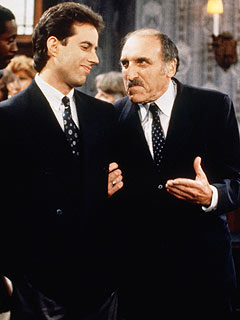
Len Lesser, best known as the scene-stealing Uncle Leo on Seinfeld – "Jerry! Hello!" was his slogan – died from cancer-related pneumonia at a care facility in Burbank, Calif., it was announced Wednesday. He was 88.
"Heaven got a great comedian and actor today," his daughter Michele said in a statement.
Of Uncle Leo, Lesser told the Los Angeles Times in 1998: "He's the kind of guy who is a total nuisance at times and the kind of guy you avoid. He's a very expansive character, and that has an attraction to it."
The New York native, who graduated in economics and government from City College in 1942 before serving in the Army during World War II, started his acting career in 1954 and appeared in the movies Birdman of Alcatraz, Kelly's Heroes, Papillon and Clint Eastwood's The Outlaw Josey Wales."
Besides the 1989-98 Seinfeld, other TV shows featuring Lesser included Get Smart, The Munsters, The Rockford Files, ER and Everybody Loves Raymond, on which he played a Leo-esque character named Garvin, a lodge brother of Raymond's father Frank (Peter Boyle).
Reports say Lesser, a father of two, was divorced in 1982 after 28 years of marriage.
(By Stephen M. Silverman, People magazine)http://www.people.com/people/article/0, ... 00,00.html
Len Lesser, best known as the scene-stealing Uncle Leo on Seinfeld – "Jerry! Hello!" was his slogan – died from cancer-related pneumonia at a care facility in Burbank, Calif., it was announced Wednesday. He was 88.
"Heaven got a great comedian and actor today," his daughter Michele said in a statement.
Of Uncle Leo, Lesser told the Los Angeles Times in 1998: "He's the kind of guy who is a total nuisance at times and the kind of guy you avoid. He's a very expansive character, and that has an attraction to it."
The New York native, who graduated in economics and government from City College in 1942 before serving in the Army during World War II, started his acting career in 1954 and appeared in the movies Birdman of Alcatraz, Kelly's Heroes, Papillon and Clint Eastwood's The Outlaw Josey Wales."
Besides the 1989-98 Seinfeld, other TV shows featuring Lesser included Get Smart, The Munsters, The Rockford Files, ER and Everybody Loves Raymond, on which he played a Leo-esque character named Garvin, a lodge brother of Raymond's father Frank (Peter Boyle).
Reports say Lesser, a father of two, was divorced in 1982 after 28 years of marriage.
"It was impossible to get a conversation going, everybody was talking too much." - Yogi Berra
-
genlock

- Moderator

- Posts: 5867
- Joined: Fri Dec 21, 2001 4:09 pm
- Location: OW
Re: The Rest In Peace and Remembrance Thread
"Buzzards gotta eat, just like the worms"
Josey Wales about Len Lesser's character.
Josey Wales about Len Lesser's character.
"Everyone Should be aware that you're just a screen grab away from infamy."
-
David Paleg
- Member
- Posts: 1024
- Joined: Sat Jul 31, 2004 8:43 pm
- Location: Cross Lanes, WV, Earth. Solar System, Milky Way
- Contact:
Re: The Rest In Peace and Remembrance Thread
Drummer For ? & The Mysterians Dead At 65
Eddie Serrato Played On Band's Hit '96 Tears'
5:08 pm EST February 24, 2011
SAGINAW, Mich. -- Eddie Serrato, the original drummer on Question Mark and the Mysterians' song "96 Tears," passed away Thursday morning.
Serrato was due to be released from Henry Ford Hospital in Detroit this morning after having surgery. Instead, his daughter told TV5 he had a heart attack. Serrato was 65.
While Serrato was from the Saginaw area, ? and the Mysterians first formed in Bay City in 1962. The band received a gold record for the song "96 Tears" and appeared on "The Dick Clark Show."
Serrato's daughter said in the last few years he was involved in producing Tejano music in Texas.
Still heavily into music, she estimated he owned 5000 CDs and more than 60,000 songs on his computer hard drive.
Funeral services are being arranged through Diesler Funeral Home in Saginaw Township.
Eddie Serrato Played On Band's Hit '96 Tears'
5:08 pm EST February 24, 2011
SAGINAW, Mich. -- Eddie Serrato, the original drummer on Question Mark and the Mysterians' song "96 Tears," passed away Thursday morning.
Serrato was due to be released from Henry Ford Hospital in Detroit this morning after having surgery. Instead, his daughter told TV5 he had a heart attack. Serrato was 65.
While Serrato was from the Saginaw area, ? and the Mysterians first formed in Bay City in 1962. The band received a gold record for the song "96 Tears" and appeared on "The Dick Clark Show."
Serrato's daughter said in the last few years he was involved in producing Tejano music in Texas.
Still heavily into music, she estimated he owned 5000 CDs and more than 60,000 songs on his computer hard drive.
Funeral services are being arranged through Diesler Funeral Home in Saginaw Township.
-
genlock
- Moderator
- Posts: 5867
- Joined: Fri Dec 21, 2001 4:09 pm
- Location: OW
Re: The Rest In Peace and Remembrance Thread
Duke Snider, dead at 84.
(AP)
Duke Snider, the Hall of Fame center fielder for the charmed "Boys of Summer" who helped the Dodgers bring their elusive and only World Series crown to Brooklyn, died early Sunday of what his family called natural causes. He was 84.
Snider died at the Valle Vista Convalescent Hospital in Escondido, Calif., according to the National Baseball Hall of Fame and Museum, which announced the death on behalf of the family.
"The Duke of Flatbush" hit .295 with 407 career home runs, played in the World Series six times and won two titles. But the eight-time All-Star was defined by much more than his stats — he was, after all, part of the love affair between the borough of Brooklyn and "Dem Bums" who lived in the local neighborhoods.
(AP)
Duke Snider, the Hall of Fame center fielder for the charmed "Boys of Summer" who helped the Dodgers bring their elusive and only World Series crown to Brooklyn, died early Sunday of what his family called natural causes. He was 84.
Snider died at the Valle Vista Convalescent Hospital in Escondido, Calif., according to the National Baseball Hall of Fame and Museum, which announced the death on behalf of the family.
"The Duke of Flatbush" hit .295 with 407 career home runs, played in the World Series six times and won two titles. But the eight-time All-Star was defined by much more than his stats — he was, after all, part of the love affair between the borough of Brooklyn and "Dem Bums" who lived in the local neighborhoods.
"Everyone Should be aware that you're just a screen grab away from infamy."
-
jag
- Member
- Posts: 820
- Joined: Thu Aug 29, 2002 2:57 pm
Re: The Rest In Peace and Remembrance Thread
Frank Buckles, Last U.S. WWI vet dies at 110
MORGANTOWN, W.Va. (AP) — He was repeatedly rejected by military recruiters and got into uniform at 16 after lying about his age. But would later become the last surviving U.S. veteran of World War I.
Buckles, who also survived being a civilian POW in the Philippines in World War II, died of natural causes Sunday at his home in Charles Town, biographer and family spokesman David DeJonge said in a statement. He was 110.
Buckles had been advocating for a national memorial honoring veterans of the Great War in the nation's capital.
When asked in February 2008 how it felt to be the last of his kind, he said simply, "I realized that somebody had to be, and it was me." And he told The Associated Press he would have done it all over again, "without a doubt."
On Nov. 11, 2008, the 90th anniversary of the end of the war, Buckles attended a ceremony at the grave of World War I Gen. John Pershing in Arlington National Cemetery.
He was back in Washington a year later to endorse a proposal to rededicate the existing World War I memorial on the National Mall as the official National World War I Memorial. He told a Senate panel it was "an excellent idea." The memorial was originally built to honor District of Columbia's war dead.
Born in Missouri in 1901 and raised in Oklahoma, Buckles visited a string of military recruiters after the United States entered the "war to end all wars" in April 1917. He was repeatedly rejected before convincing an Army captain he was 18. He was actually 16 1/2.
"A boy of (that age), he's not afraid of anything. He wants to get in there," Buckles said.
Details for services and arrangements will be announced later this week. The family asks that donations be made to the National World War One Legacy Project. The project is managed by the nonprofit Survivor Quest and will educate students about Buckles and WWI through a documentary and traveling educational exhibition.
More than 4.7 million people joined the U.S. military from 1917-18. As of spring 2007, only three were still alive, according to a tally by the Department of Veterans Affairs: Buckles, J. Russell Coffey of Ohio and Harry Richard Landis of Florida.
The dwindling roster prompted a flurry of public interest, and Buckles went to Washington in May 2007 to serve as grand marshal of the national Memorial Day parade.
Coffey died Dec. 20, 2007, at age 109, while Landis died Feb. 4, 2008, at 108. Unlike Buckles, those two men were still in basic training in the United States when the war ended and did not make it overseas.
The last known Canadian veteran of the war, John Babcock of Spokane, Wash., died in February 2010.
There are no French or German veterans of the war left alive.
Buckles served in England and France, working mainly as a driver and a warehouse clerk. The fact he did not see combat didn't diminish his service, he said: "Didn't I make every effort?"
An eager student of culture and language, he used his off-duty hours to learn German, visit cathedrals, museums and tombs, and bicycle in the French countryside.
After Armistice Day, Buckles helped return prisoners of war to Germany. He returned to the United States in January 1920.
Buckles returned to Oklahoma for a while, then moved to Canada, where he worked a series of jobs before heading for New York City. There, he again took advantage of free museums, worked out at the YMCA, and landed jobs in banking and advertising.
But it was the shipping industry that suited him best, and he worked around the world for the White Star Line Steamship Co. and W.R. Grace & Co.
In 1941, while on business in the Philippines, Buckles was captured by the Japanese. He spent more than three years in prison camps.
"I was never actually looking for adventure," Buckles once said. "It just came to me."
He married in 1946 and moved to his farm in West Virginia's Eastern Panhandle in 1954, where he and wife Audrey raised their daughter, Susannah Flanagan. Audrey Buckles died in 1999.
In spring 2007, Buckles told the AP of the trouble he went through to get into the military.
"I went to the state fair up in Wichita, Kansas, and while there, went to the recruiting station for the Marine Corps," he said. "The nice Marine sergeant said I was too young when I gave my age as 18, said I had to be 21."
Buckles returned a week later.
"I went back to the recruiting sergeant, and this time I was 21," he said with a grin. "I passed the inspection ... but he told me I just wasn't heavy enough."
Then he tried the Navy, whose recruiter told Buckles he was flat-footed.
Buckles wouldn't quit. In Oklahoma City, an Army captain demanded a birth certificate.
"I told him birth certificates were not made in Missouri when I was born, that the record was in a family Bible. I said, 'You don't want me to bring the family Bible down, do you?'" Buckles said with a laugh. "He said, 'OK, we'll take you.'"
He enlisted Aug. 14, 1917, serial number 15577.
MORGANTOWN, W.Va. (AP) — He was repeatedly rejected by military recruiters and got into uniform at 16 after lying about his age. But would later become the last surviving U.S. veteran of World War I.
Buckles, who also survived being a civilian POW in the Philippines in World War II, died of natural causes Sunday at his home in Charles Town, biographer and family spokesman David DeJonge said in a statement. He was 110.
Buckles had been advocating for a national memorial honoring veterans of the Great War in the nation's capital.
When asked in February 2008 how it felt to be the last of his kind, he said simply, "I realized that somebody had to be, and it was me." And he told The Associated Press he would have done it all over again, "without a doubt."
On Nov. 11, 2008, the 90th anniversary of the end of the war, Buckles attended a ceremony at the grave of World War I Gen. John Pershing in Arlington National Cemetery.
He was back in Washington a year later to endorse a proposal to rededicate the existing World War I memorial on the National Mall as the official National World War I Memorial. He told a Senate panel it was "an excellent idea." The memorial was originally built to honor District of Columbia's war dead.
Born in Missouri in 1901 and raised in Oklahoma, Buckles visited a string of military recruiters after the United States entered the "war to end all wars" in April 1917. He was repeatedly rejected before convincing an Army captain he was 18. He was actually 16 1/2.
"A boy of (that age), he's not afraid of anything. He wants to get in there," Buckles said.
Details for services and arrangements will be announced later this week. The family asks that donations be made to the National World War One Legacy Project. The project is managed by the nonprofit Survivor Quest and will educate students about Buckles and WWI through a documentary and traveling educational exhibition.
More than 4.7 million people joined the U.S. military from 1917-18. As of spring 2007, only three were still alive, according to a tally by the Department of Veterans Affairs: Buckles, J. Russell Coffey of Ohio and Harry Richard Landis of Florida.
The dwindling roster prompted a flurry of public interest, and Buckles went to Washington in May 2007 to serve as grand marshal of the national Memorial Day parade.
Coffey died Dec. 20, 2007, at age 109, while Landis died Feb. 4, 2008, at 108. Unlike Buckles, those two men were still in basic training in the United States when the war ended and did not make it overseas.
The last known Canadian veteran of the war, John Babcock of Spokane, Wash., died in February 2010.
There are no French or German veterans of the war left alive.
Buckles served in England and France, working mainly as a driver and a warehouse clerk. The fact he did not see combat didn't diminish his service, he said: "Didn't I make every effort?"
An eager student of culture and language, he used his off-duty hours to learn German, visit cathedrals, museums and tombs, and bicycle in the French countryside.
After Armistice Day, Buckles helped return prisoners of war to Germany. He returned to the United States in January 1920.
Buckles returned to Oklahoma for a while, then moved to Canada, where he worked a series of jobs before heading for New York City. There, he again took advantage of free museums, worked out at the YMCA, and landed jobs in banking and advertising.
But it was the shipping industry that suited him best, and he worked around the world for the White Star Line Steamship Co. and W.R. Grace & Co.
In 1941, while on business in the Philippines, Buckles was captured by the Japanese. He spent more than three years in prison camps.
"I was never actually looking for adventure," Buckles once said. "It just came to me."
He married in 1946 and moved to his farm in West Virginia's Eastern Panhandle in 1954, where he and wife Audrey raised their daughter, Susannah Flanagan. Audrey Buckles died in 1999.
In spring 2007, Buckles told the AP of the trouble he went through to get into the military.
"I went to the state fair up in Wichita, Kansas, and while there, went to the recruiting station for the Marine Corps," he said. "The nice Marine sergeant said I was too young when I gave my age as 18, said I had to be 21."
Buckles returned a week later.
"I went back to the recruiting sergeant, and this time I was 21," he said with a grin. "I passed the inspection ... but he told me I just wasn't heavy enough."
Then he tried the Navy, whose recruiter told Buckles he was flat-footed.
Buckles wouldn't quit. In Oklahoma City, an Army captain demanded a birth certificate.
"I told him birth certificates were not made in Missouri when I was born, that the record was in a family Bible. I said, 'You don't want me to bring the family Bible down, do you?'" Buckles said with a laugh. "He said, 'OK, we'll take you.'"
He enlisted Aug. 14, 1917, serial number 15577.
-
David Paleg
- Member
- Posts: 1024
- Joined: Sat Jul 31, 2004 8:43 pm
- Location: Cross Lanes, WV, Earth. Solar System, Milky Way
- Contact:
Re: The Rest In Peace and Remembrance Thread
Blues legend Eddie Kirkland dies in Fla. wreck
Feb 28, 8:38 AM (ET)
CRYSTAL RIVER, Fla. (AP) - An 88-year-old blues legend known as the "Gypsy of the Blues" was killed in Florida when his car turned into the path of a Greyhound bus.
Eddie Kirkland was traveling southeast on U.S. Highway 98 in Crystal River, north of Tampa, about 8:30 a.m. Sunday when he tried to make a U-turn in front of the bus, the Florida Highway Patrol said. The bus, which was traveling northwest, pushed Kirkland's Ford Taurus about 200 yards before the vehicles stopped.
Kirkland was flown to Tampa General Hospital, where he later died.
Thirteen passengers were on the bus, which was being driven by 67-year-old James Smith of Tallahassee, the Highway Patrol said. No one on the bus was injured.
The Highway Patrol continued to investigate the accident Monday.
According to his website, Kirkland, who lived in Macon, Ga., performed Saturday night at the Dunedin Brewery in Dunedin, the final stop in a four-city swing through Florida in February. His tour was to pick up April 8 in Pensacola.
Born in Jamaica, and raised in Alabama, Kirkland eventually moved to Indiana before he settled in Detroit. He polished his blues sound and toured for 7 1/2 years with John Lee Hooker. He moved to Georgia, became a bandleader for Otis Redding and performed with a variety of artists, including Little Richard, Ben King, Ruth Brown and Little Johnnie Taylor.
Feb 28, 8:38 AM (ET)
CRYSTAL RIVER, Fla. (AP) - An 88-year-old blues legend known as the "Gypsy of the Blues" was killed in Florida when his car turned into the path of a Greyhound bus.
Eddie Kirkland was traveling southeast on U.S. Highway 98 in Crystal River, north of Tampa, about 8:30 a.m. Sunday when he tried to make a U-turn in front of the bus, the Florida Highway Patrol said. The bus, which was traveling northwest, pushed Kirkland's Ford Taurus about 200 yards before the vehicles stopped.
Kirkland was flown to Tampa General Hospital, where he later died.
Thirteen passengers were on the bus, which was being driven by 67-year-old James Smith of Tallahassee, the Highway Patrol said. No one on the bus was injured.
The Highway Patrol continued to investigate the accident Monday.
According to his website, Kirkland, who lived in Macon, Ga., performed Saturday night at the Dunedin Brewery in Dunedin, the final stop in a four-city swing through Florida in February. His tour was to pick up April 8 in Pensacola.
Born in Jamaica, and raised in Alabama, Kirkland eventually moved to Indiana before he settled in Detroit. He polished his blues sound and toured for 7 1/2 years with John Lee Hooker. He moved to Georgia, became a bandleader for Otis Redding and performed with a variety of artists, including Little Richard, Ben King, Ruth Brown and Little Johnnie Taylor.
-
Scott Reppert
- Member
- Posts: 1446
- Joined: Tue Dec 18, 2001 12:50 pm
- Location: Fairmont, WV
Re: The Rest In Peace and Remembrance Thread
Dylan Cover Girl, Girlfriend, Song Inspiration Passes Away At 67
Suze Rotolo, Bob Dylan's longtime girlfriend during his fledgling days as a Greenwich Village folk singer and the woman who appears alongside him on the famous cover of "The Freewheelin' Bob Dylan," passed away this weekend at her home in Manhattan following a long illness, Rolling Stone reports. Rotolo was 67. In addition to forever being captured on the Don Hunstein-photographed "Freewheelin' " cover, Rotolo's three-year relationship with Dylan, from 1961 to 1964, also inspired him to write three of his early love songs, "Don't Think Twice, It's Alright," "Tomorrow is a Long Time," and "Boots of Spanish Leather." (Dylan's breakup with Rotolo also influenced one of his most vitriolic tunes, "Ballad in Plain D," a song Dylan later regretted recording.) Rotolo is also acknowledged for pushing Dylan toward the political awareness that flavored his Greenwich Village work.
"All is gone, all is gone, admit it, take flight. I gagged twice, doubled, tears blinding my sight. My mind it was mangled, I ran into the night. Leaving all of love's ashes behind me," Dylan wrote in "Ballad in Plain D" after his breakup with Rotolo. "The wind knocks my window, the room it is wet. The words to say I'm sorry, I haven't found yet. I think of her often and hope whoever she's met, will be fully aware of how precious she is."
In the many writings about the pair, their relationship is invariably described as "tumultuous" or "rocky." In its obituary for Rotolo, The New York Times points to her autobiography, "A Freewheelin' Time: A Memoir of Greenwich Village in the 60s" where she describes her difficulty with being a "boyfriend's 'chick,' a string on his guitar."
Following her August 1963 breakup with Dylan, Rotolo reunited with film editor Enzo Bartoccioli, who she met in Italy a year earlier. She later married Bartoccioli, and the couple remained together until her death this weekend. Over the past decades, Rotolo rarely spoke about her time with Dylan, but that changed within the past few years. She was interviewed for Martin Scorsese's Dylan documentary "No Direction Home," and later authored the highly regarded biography "A Freewheelin' Time: A Memoir of Greenwich Village in the Sixties." Rotolo was also a noted illustrator and artist.
Suze Rotolo, Bob Dylan's longtime girlfriend during his fledgling days as a Greenwich Village folk singer and the woman who appears alongside him on the famous cover of "The Freewheelin' Bob Dylan," passed away this weekend at her home in Manhattan following a long illness, Rolling Stone reports. Rotolo was 67. In addition to forever being captured on the Don Hunstein-photographed "Freewheelin' " cover, Rotolo's three-year relationship with Dylan, from 1961 to 1964, also inspired him to write three of his early love songs, "Don't Think Twice, It's Alright," "Tomorrow is a Long Time," and "Boots of Spanish Leather." (Dylan's breakup with Rotolo also influenced one of his most vitriolic tunes, "Ballad in Plain D," a song Dylan later regretted recording.) Rotolo is also acknowledged for pushing Dylan toward the political awareness that flavored his Greenwich Village work.
"All is gone, all is gone, admit it, take flight. I gagged twice, doubled, tears blinding my sight. My mind it was mangled, I ran into the night. Leaving all of love's ashes behind me," Dylan wrote in "Ballad in Plain D" after his breakup with Rotolo. "The wind knocks my window, the room it is wet. The words to say I'm sorry, I haven't found yet. I think of her often and hope whoever she's met, will be fully aware of how precious she is."
In the many writings about the pair, their relationship is invariably described as "tumultuous" or "rocky." In its obituary for Rotolo, The New York Times points to her autobiography, "A Freewheelin' Time: A Memoir of Greenwich Village in the 60s" where she describes her difficulty with being a "boyfriend's 'chick,' a string on his guitar."
Following her August 1963 breakup with Dylan, Rotolo reunited with film editor Enzo Bartoccioli, who she met in Italy a year earlier. She later married Bartoccioli, and the couple remained together until her death this weekend. Over the past decades, Rotolo rarely spoke about her time with Dylan, but that changed within the past few years. She was interviewed for Martin Scorsese's Dylan documentary "No Direction Home," and later authored the highly regarded biography "A Freewheelin' Time: A Memoir of Greenwich Village in the Sixties." Rotolo was also a noted illustrator and artist.
Scott Reppert
Music Director/Program Director/On-Air Personality
WTCS/WFGM/WMQC/WAIJ/WLIC/WRIJ/WKJL/WRWJ/WPCL/WWPN
Operations Manager: Hope Radio, T8WH, Palau
Production/Editor: "Believe Right" and "MFC WorldWide"
"For mine eyes have seen Thy salvation"--Luke 2:30
Music Director/Program Director/On-Air Personality
WTCS/WFGM/WMQC/WAIJ/WLIC/WRIJ/WKJL/WRWJ/WPCL/WWPN
Operations Manager: Hope Radio, T8WH, Palau
Production/Editor: "Believe Right" and "MFC WorldWide"
"For mine eyes have seen Thy salvation"--Luke 2:30
-
unchoopfan
- Member
- Posts: 209
- Joined: Mon Feb 03, 2003 10:52 am
Gary Winick, film director, 49 - Feb. 27
Gary Winick, Director of "Letters to Juliet" and "13 Going on 30," Dies at 49
E!ONLINE - As Hollywood celebrated yesterday, one of its independent voices quietly slipped away.
Gary Winick, director of Letters to Juliet, Bride Wars and 13 Going on 30, died at age 49 following a long fight with brain cancer.
Though most filmgoers probably know his work directing actress-friendly films starring Amanda Seyfried, Anne Hathaway, Kate Hudson and Jennifer Garner, the director was also a force in independent film.
As founder of InDigEnt, Winick produced 19 independent films over the last decade, including Ethan Hawke's Chelsea Walls, the Katie Holmes vehicle Pieces of April, Rebecca Miller's Personal Velocity and his own Sundance hit, Tadpole.

Read more: http://www.eonline.com/uberblog/b228505 ... z1FIdMcWno
E!ONLINE - As Hollywood celebrated yesterday, one of its independent voices quietly slipped away.
Gary Winick, director of Letters to Juliet, Bride Wars and 13 Going on 30, died at age 49 following a long fight with brain cancer.
Though most filmgoers probably know his work directing actress-friendly films starring Amanda Seyfried, Anne Hathaway, Kate Hudson and Jennifer Garner, the director was also a force in independent film.
As founder of InDigEnt, Winick produced 19 independent films over the last decade, including Ethan Hawke's Chelsea Walls, the Katie Holmes vehicle Pieces of April, Rebecca Miller's Personal Velocity and his own Sundance hit, Tadpole.
Read more: http://www.eonline.com/uberblog/b228505 ... z1FIdMcWno
-
Lester

- Administrator

- Posts: 2815
- Joined: Fri Dec 14, 2001 5:47 pm
- Contact:
Re: The Rest In Peace and Remembrance Thread
Former Hollywood actress and sex symbol Jane Russell has died the age of 89.
http://www.bbc.co.uk/news/entertainment-arts-12604858
http://www.bbc.co.uk/news/entertainment-arts-12604858
-
unchoopfan
- Member
- Posts: 209
- Joined: Mon Feb 03, 2003 10:52 am
March 4: CBS Sports' Frank Chirkinian/singer Johnny Preston
CBS Sports executive producer Frank Chirkinian
http://www.nytimes.com/2011/03/06/sport ... inian.html
Recognized as the "father of televised golf," Chirkinian defined televised golf as the innovative executive producer and director for CBS’s coverage of the Masters tournament for 38 consecutive years, He died Friday, March 4, at his Florida home after suffering from lung cancer. He was 84.
A member of the Sports Broadcasting Hall of Fame, Chirkinian is credited with the idea of mounting a camera on the blimps that fly over sporting events. During his 40-plus years with CBS Sports, Chirkinian earned four Emmys directing coverage of professional golf, the Winter Olympics, the United States Open tennis tournament, college and pro football, auto racing and thoroughbred racing’s Triple Crown. He was elected last month to the World Golf Hall of Fame in St. Augustine, Fla., and will be posthumously inducted in May.
"Running Bear" singer Johnny Preston
BEAUMONT, Texas (AP) — Pop singer Johnny Preston, who in 1960 had the chart-topping hit "Running Bear," has died. He was 71.
His son Scott Preston said the singer died Friday afternoon at Baptist Beaumont Hospital. He had bypass surgery late last year and suffered from lingering health problems.
He was born Johnny Preston Courville and spent most of his life in Port Arthur. He first performed in the Lamar University group The Shades in 1957 and was brought to the attention of Mercury Records by disc jockey/singer J.P. "The Big Bopper" Richardson.
Richardson wrote and produced "Running Bear," which became a million-seller for Preston the year after Richardson died in the same plane crash that killed Buddy Holly and Ritchie Valens. Preston followed up with two more Billboard Top 20 hits in the summer of 1960, "Cradle of Love" and "Feel So Fine."
http://www.nytimes.com/2011/03/06/sport ... inian.html
Recognized as the "father of televised golf," Chirkinian defined televised golf as the innovative executive producer and director for CBS’s coverage of the Masters tournament for 38 consecutive years, He died Friday, March 4, at his Florida home after suffering from lung cancer. He was 84.
A member of the Sports Broadcasting Hall of Fame, Chirkinian is credited with the idea of mounting a camera on the blimps that fly over sporting events. During his 40-plus years with CBS Sports, Chirkinian earned four Emmys directing coverage of professional golf, the Winter Olympics, the United States Open tennis tournament, college and pro football, auto racing and thoroughbred racing’s Triple Crown. He was elected last month to the World Golf Hall of Fame in St. Augustine, Fla., and will be posthumously inducted in May.
"Running Bear" singer Johnny Preston
BEAUMONT, Texas (AP) — Pop singer Johnny Preston, who in 1960 had the chart-topping hit "Running Bear," has died. He was 71.
His son Scott Preston said the singer died Friday afternoon at Baptist Beaumont Hospital. He had bypass surgery late last year and suffered from lingering health problems.
He was born Johnny Preston Courville and spent most of his life in Port Arthur. He first performed in the Lamar University group The Shades in 1957 and was brought to the attention of Mercury Records by disc jockey/singer J.P. "The Big Bopper" Richardson.
Richardson wrote and produced "Running Bear," which became a million-seller for Preston the year after Richardson died in the same plane crash that killed Buddy Holly and Ritchie Valens. Preston followed up with two more Billboard Top 20 hits in the summer of 1960, "Cradle of Love" and "Feel So Fine."
-
Scott Reppert
- Member
- Posts: 1446
- Joined: Tue Dec 18, 2001 12:50 pm
- Location: Fairmont, WV
Re: The Rest In Peace and Remembrance Thread
Just heard Conrad play the Sonny James version of "Running Bear" yesterday morning.
One of the things I would love to have a copy of is the version of "Running Bear" we did as a group back in the punk days. Like a minute and a half long and we did it in the reverse style of the original: speeded up verses and normal paced chorus. It rocked...
One of the things I would love to have a copy of is the version of "Running Bear" we did as a group back in the punk days. Like a minute and a half long and we did it in the reverse style of the original: speeded up verses and normal paced chorus. It rocked...
Scott Reppert
Music Director/Program Director/On-Air Personality
WTCS/WFGM/WMQC/WAIJ/WLIC/WRIJ/WKJL/WRWJ/WPCL/WWPN
Operations Manager: Hope Radio, T8WH, Palau
Production/Editor: "Believe Right" and "MFC WorldWide"
"For mine eyes have seen Thy salvation"--Luke 2:30
Music Director/Program Director/On-Air Personality
WTCS/WFGM/WMQC/WAIJ/WLIC/WRIJ/WKJL/WRWJ/WPCL/WWPN
Operations Manager: Hope Radio, T8WH, Palau
Production/Editor: "Believe Right" and "MFC WorldWide"
"For mine eyes have seen Thy salvation"--Luke 2:30
-
jag
- Member
- Posts: 820
- Joined: Thu Aug 29, 2002 2:57 pm
Re: The Rest In Peace and Remembrance Thread
Comedian Mike DeStefano, who made it to the last rounds of NBC's "Last Comic Standing," has died, his manager confirmed. According to various reports, he was 44.
The HIV-positive comedian, who often joked about addiction and disease, died of a heart attack, according to Punchline Magazine. He explained in his online biography that he volunteered to entertain the audience at a convention and became a comedian because of the good response.
He appeared on the the "Opie and Anthony Show," "Late Night with Conan O'Brien," "Comedy Central's Live at Gotham" and at the HBO Aspen Comedy Festival and the Just for Laughs Comedy Festival in Montreal. He placed fourth on "Last Comic Standing."
The comedian also performed in stage shows, including one, "A Cherry Tree in the Bronx," that was to have had a special sneak preview performance at New York's Barrow Street Theater on Wednesday.
DeStefano was known for his brutal honesty and dark material. On his website, he explained, "I am a stand up comic. Before that, I was a drug counselor. Before that, I was a drug addict. Before that, I was 12!"
"We are indeed incredibly saddened by the loss of this amazing man," his manager, Mark Schulman, said in a statement. "He had touched the lives of many with his unique brand of comedy and was looking forward to sharing the same with so many more. Mostly, we will all miss his huge heart and incredibly loving and selfless passion for people."
The HIV-positive comedian, who often joked about addiction and disease, died of a heart attack, according to Punchline Magazine. He explained in his online biography that he volunteered to entertain the audience at a convention and became a comedian because of the good response.
He appeared on the the "Opie and Anthony Show," "Late Night with Conan O'Brien," "Comedy Central's Live at Gotham" and at the HBO Aspen Comedy Festival and the Just for Laughs Comedy Festival in Montreal. He placed fourth on "Last Comic Standing."
The comedian also performed in stage shows, including one, "A Cherry Tree in the Bronx," that was to have had a special sneak preview performance at New York's Barrow Street Theater on Wednesday.
DeStefano was known for his brutal honesty and dark material. On his website, he explained, "I am a stand up comic. Before that, I was a drug counselor. Before that, I was a drug addict. Before that, I was 12!"
"We are indeed incredibly saddened by the loss of this amazing man," his manager, Mark Schulman, said in a statement. "He had touched the lives of many with his unique brand of comedy and was looking forward to sharing the same with so many more. Mostly, we will all miss his huge heart and incredibly loving and selfless passion for people."
-
jag
- Member
- Posts: 820
- Joined: Thu Aug 29, 2002 2:57 pm
Re: The Rest In Peace and Remembrance Thread
Former Alice In Chains bassist, Mike Starr, dead in Utah
Mike Starr, the former bassist for '90s-era grunge rockers "Alice in Chains" who was more recently seen on season three of VH1's "Celebrity Rehab with Dr. Drew," is dead, according to TMZ.
Police reportedly found Starr's body in a Salt Lake City home after being called to the house Tuesday (March 7) afternoon.
Mike Starr, the former bassist for '90s-era grunge rockers "Alice in Chains" who was more recently seen on season three of VH1's "Celebrity Rehab with Dr. Drew," is dead, according to TMZ.
Police reportedly found Starr's body in a Salt Lake City home after being called to the house Tuesday (March 7) afternoon.